
Budget Family Home Renovation Project: Your 2026 Guide


A budget family home renovation project is defined as a planned series of targeted upgrades that improve your home’s function and appearance without exceeding a fixed spending limit. The industry term for this approach is value-driven renovation planning, and it combines cost control, prioritization, and selective DIY work to deliver real results. Families who apply this method save over $3,000 annually through smart choices alone. That figure is not a ceiling. With 2026 government rebates added in, the total savings potential climbs much higher. At Yorcon, we have watched families transform their homes by spending carefully, not lavishly, and the results speak for themselves.
How to plan a budget family home renovation project
The single most powerful thing you can do before picking up a paintbrush is set a fixed maximum budget. Proper planning reduces renovation costs by 30–40% compared to impulsive projects. That gap represents thousands of dollars for most families.
Your budget needs to account for four categories: materials, labor, permits, and a contingency fund. The contingency fund is not optional. Allocate 10–15% of your total budget to cover surprises, because surprises always arrive. A cracked subfloor, an outdated electrical circuit, or a delayed delivery can each blow your timeline and your wallet if you have not planned for them.
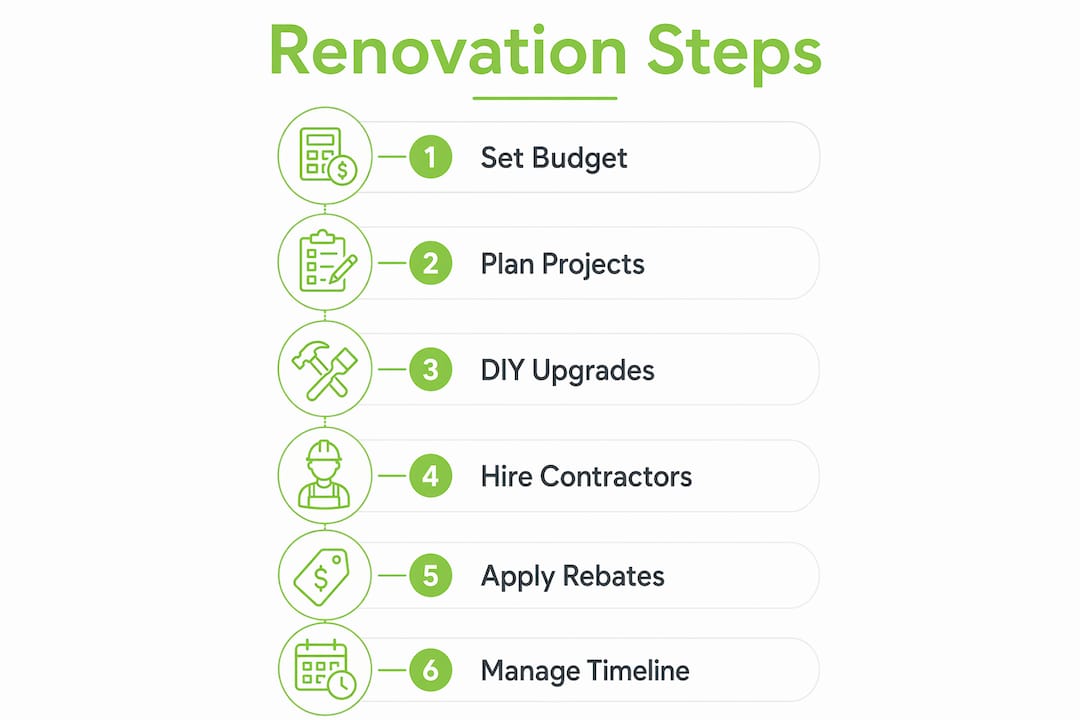
Here is how to build your renovation budget step by step:
Set your hard ceiling. Decide the absolute maximum you will spend before you research a single product.
Research material costs first. Visit suppliers directly and compare prices across at least three sources before committing.
Separate must-haves from nice-to-haves. A new bathroom vanity is a must-have if the current one leaks. New decorative tiles are a nice-to-have.
Avoid layout changes. Moving a sink, toilet, or power point triggers expensive plumbing and electrical work. Keep fixtures where they are whenever possible.
Get multiple detailed quotes. A single quote is a guess. Three quotes give you a real market rate and negotiating power.
Lock in your design before you start. Changing plans mid-project increases your budget by 3–7% due to scope creep and material waste.
Pro Tip: Ask each contractor to itemize their quote by task, not just by total. This makes it easy to spot where costs are inflated and gives you a clear record if disputes arise.

What are the best DIY upgrades for an affordable home makeover?
Five high-impact DIY upgrades deliver the strongest return for families on a tight budget. Each one improves how your home looks and feels without requiring a builder.
Paint your interiors. DIY painting saves $2,000–$3,500 compared to hiring professionals. Use quality primer and a mid-sheen finish in living areas for a result that lasts years.
Reface kitchen cabinets. Replacing cabinet doors and drawer fronts costs a fraction of a full kitchen remodel. Savings reach up to $1,200 compared to full replacement.
Upgrade hardware. Swapping handles, hinges, and tap fittings across a kitchen and bathroom costs as little as $150 and changes the entire feel of the room.
Install new lighting. LED downlights replace old halogen fittings in an afternoon. The upfront cost is low, and the energy savings add up month after month.
DIY tiling in small areas. A tiled splashback or bathroom feature wall is achievable for most families with a weekend, a tile saw rental, and a YouTube tutorial.
Upgrade | Approximate DIY cost | Approximate saving vs. professional |
Interior painting | $300–$600 | $2,000–$3,500 |
Cabinet refacing | $500–$900 | Up to $1,200 |
Hardware replacement | $100–$200 | $150+ |
LED lighting install | $200–$400 | $400–$800 |
Small area tiling | $300–$700 | $800–$1,500 |
Beyond these five upgrades, simple storage solutions add enormous value in family homes. Built-in shelving, under-stair storage, and wardrobe organizers cost little but reclaim space that families genuinely use every day.
One insight worth holding onto: budget renovations are not about cheap finishes. They are about spending well in high-use areas and keeping cosmetic updates affordable everywhere else. A durable benchtop in the kitchen earns its cost. Decorative wallpaper in a hallway does not need to.
Pro Tip: Sequence your projects by starting with energy efficiency upgrades like draft-proofing and insulation before moving to cosmetic work. These upgrades deliver comfort and savings that make every subsequent project feel more worthwhile.
Know when to call a professional. Electrical work, structural changes, and anything involving load-bearing walls require a licensed tradesperson. DIY in those areas is not a cost-saving measure. It is a liability.
What government rebates can reduce your renovation costs in 2026?
Victorian homeowners can save up to $8,000 by stacking government rebate programs in 2026. That is real money that reduces what you need to spend out of pocket on energy-efficient upgrades.
The main programs available to Melbourne families include:
Solar Victoria rebates. These cover a portion of solar panel installation costs for eligible households, with income thresholds that include most middle-income families.
Victorian Energy Upgrades (VEU). This program subsidizes the cost of replacing old appliances with efficient alternatives, including heat pumps, reverse-cycle air conditioning, and LED lighting.
Federal Small-scale Technology Certificates (STCs). These reduce the upfront cost of solar and heat pump hot water systems through a point-of-sale discount applied by accredited installers.
Household Energy Upgrades Fund. This federal program offers low-interest loans for energy-efficient home improvements, including insulation, double glazing, and efficient heating systems.
The critical rule with rebates is timing. Homeowners who apply before contracting save thousands and avoid missing out on benefits that cannot be claimed retrospectively. Check eligibility on the relevant government portal before you sign anything with a supplier or installer.
Stacking multiple programs on a single project, for example combining Solar Victoria with federal STCs on a solar installation, can provide upfront savings of $4,000–$8,000. That kind of reduction changes what is possible on a family renovation budget. For structural planning considerations related to these upgrades, resources like Survey Merchant’s blog cover relevant construction and site assessment topics worth reviewing.
Common pitfalls in budget home renovations and how to avoid them
The biggest threat to any family renovation budget is scope creep. Scope creep happens when small additions accumulate during a project until the original plan is unrecognizable and the budget is gone.
Locking in all designs, materials, and finishes before construction begins is the single most effective way to prevent budget blowouts. Every decision made mid-project costs more than the same decision made before work starts.
Beyond scope creep, these pitfalls catch families off guard most often:
Hidden structural costs. Opening a wall sometimes reveals rot, mold, or outdated wiring that must be fixed before anything else. Budget your contingency fund specifically for this possibility.
Impulsive upgrades. Seeing a beautiful tile at the supplier and swapping it in mid-project adds cost in two ways: the tile itself and the labor to adjust the plan.
Choosing cheap materials in high-traffic areas. Quality durable finishes in kitchens, bathrooms, and hallways outlast budget alternatives by years. The long-term saving is real even if the upfront cost is higher.
Vague contractor agreements. A quote that says “kitchen renovation” without itemizing tasks is an invitation for disputes. Require line-item detail before signing anything.
Skipping permits. Unpermitted work creates problems when you sell. Always check with your local council before starting structural or electrical work.
Families who plan thoroughly before starting consistently spend less and finish faster than those who figure it out as they go. The discipline of deciding everything upfront feels slow at the start. It saves weeks and thousands of dollars by the end.
Key Takeaways
A budget family home renovation project succeeds when planning, prioritization, and available financial incentives work together before a single tool is picked up.
Point | Details |
Plan before you spend | Set a fixed budget with a 10–15% contingency fund before researching materials or labor. |
DIY delivers real savings | Five targeted DIY upgrades can save families over $3,000 compared to hiring professionals for the same work. |
Rebates reduce upfront costs | Stacking Victorian and federal rebate programs in 2026 can cut energy upgrade costs by $4,000–$8,000. |
Scope creep is the top risk | Lock in all designs and materials before construction starts to prevent 3–7% budget overruns. |
Quality matters in high-use areas | Invest in durable finishes for kitchens and bathrooms; keep cosmetic updates affordable elsewhere. |
What I have learned from years of budget family renovations
Families often come to us at Yorcon expecting that a tight budget means a compromised result. That assumption is wrong, and I have seen it disproven hundreds of times.
The families who get the most from a limited renovation budget are not the ones who spend the least. They are the ones who decide the most clearly. They know which room their kids actually live in. They know which surface takes the most punishment. They spend well there and keep everything else simple.
I have also seen the opposite. Families who start with a clear budget and then add “just one more thing” every week. By the time the project wraps, they have spent 40% more than planned and feel less satisfied, not more. The additions dilute the impact of the original vision.
My honest advice: pick two or three rooms, decide exactly what you want in each one, and finish those completely before considering anything else. Incremental progress on a focused plan beats scattered progress on an ambitious one every time. And if you are considering whether to renovate instead of move, the numbers almost always favor staying and improving what you already have.
DIY is worth attempting more than most families think. Painting, hardware, and basic tiling are genuinely learnable skills. The confidence that comes from completing your first DIY project tends to make the next one easier and more enjoyable.
— Matthew
How Yorcon helps Melbourne families renovate within budget
Families planning a renovation in Melbourne do not have to figure it all out alone. Yorcon’s home renovation services are built around exactly the kind of careful, quality-focused approach this article describes. Nearly 20 years of experience means we know where families overspend, where they underinvest, and how to build a project plan that delivers real results within a real budget.
From material selection to contractor management and permit coordination, Yorcon handles the complexity so you can focus on the outcome. If your family is thinking bigger, our home extensions team can help you add space without the cost and disruption of moving. Reach out to Yorcon to talk through your renovation goals and get a clear, itemized picture of what is possible for your family and your budget.
FAQ
What is a realistic budget for a family home renovation?
A realistic family renovation budget depends on the scope, but adding a 10–15% contingency fund to your total is standard practice. Targeted upgrades like painting and cabinet refacing deliver strong results for $5,000–$15,000 depending on your home’s size.
How much can DIY save on a home renovation project?
DIY painting alone saves $2,000–$3,500 compared to hiring professionals. Across five common upgrades, families can save over $3,000 in total without sacrificing quality.
What government rebates are available for home renovations in 2026?
Victorian homeowners can access Solar Victoria rebates, the Victorian Energy Upgrades program, federal STCs, and the Household Energy Upgrades Fund. Stacking these programs can reduce energy upgrade costs by $4,000–$8,000.
How do I prevent my renovation from going over budget?
Lock in all designs and materials before construction begins. Changing plans mid-project adds 3–7% to your total cost through scope creep and material waste.
Should I renovate or move if my family needs more space?
Renovating almost always costs less than buying a new home when you factor in stamp duty, agent fees, and moving costs. A well-planned renovation or extension can add the space your family needs at a fraction of the cost of relocating.
Recommended


