
Double Glazing Retrofit Melbourne: A Practical Guide

Updated: Aug 17
Yes, retrofitting double glazing is worth it for most Melbourne homeowners, particularly those in single-glazed period homes, noisy inner-city streets, or houses where heating and cooling costs feel relentless. Before you book anything, check two things: whether your frames are sound and draught-sealed, and whether your home sits under a heritage overlay. Those two factors shape every decision that follows.
Table of Contents
What does the retrofit process actually look like?
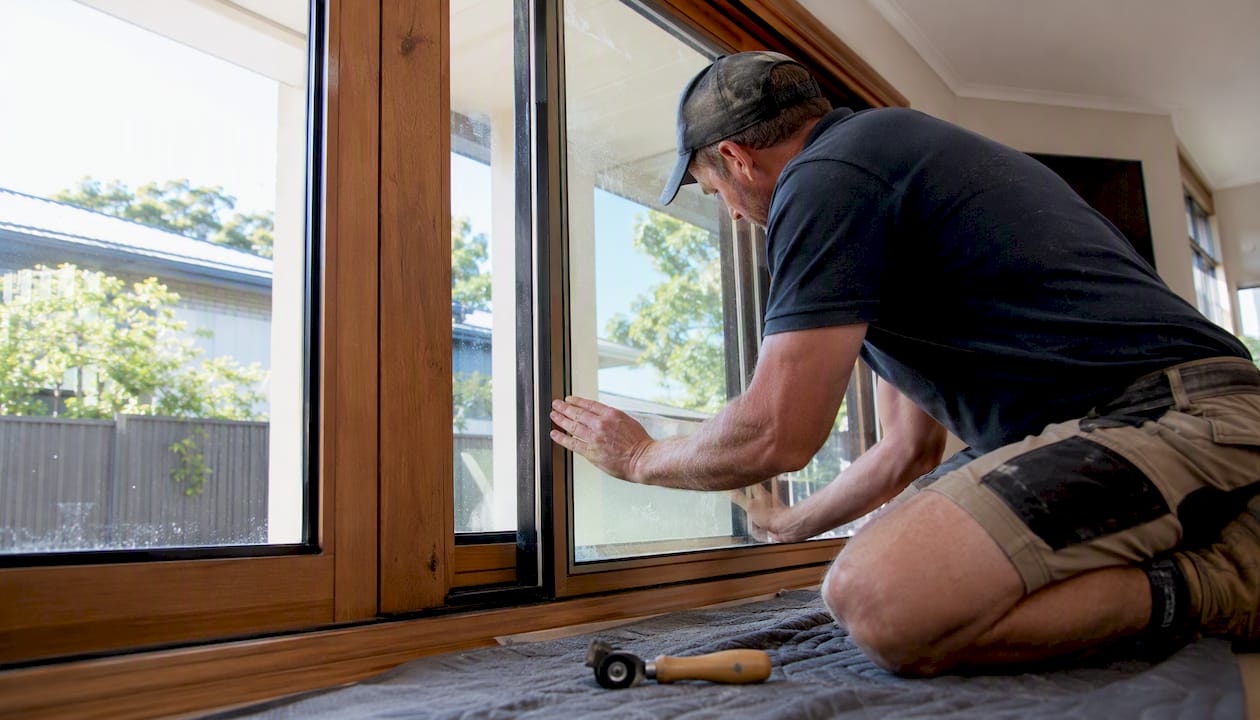
The process follows a predictable sequence. A qualified installer visits to measure every opening, assess frame condition, and specify the right insulated glazing unit (IGU) for each room. You receive a quote, approve it, and the IGUs go into manufacture, a lead time of roughly four weeks for most custom units. On-site installation is comparatively quick once the glass arrives, often completed within a short period after the glass arrives. The installer removes the existing single-glazed pane, routes or adapts the rebate if needed, fits the IGU with premium draught seals, and finishes the joinery. A follow-up check confirms seals, hardware operation, and drainage.
Frame repair and draught sealing happen before the glass goes in, not after. Skipping that sequence traps moisture and undermines both thermal and acoustic performance.
How long before a retrofit pays for itself?
Honestly, longer than most marketing suggests. Australian installed costs run between moderate and high costs per square metre, and double-glazed windows typically cost noticeably more than standard replacements. The main price drivers are frame material, glass specification, hardware, and window size.
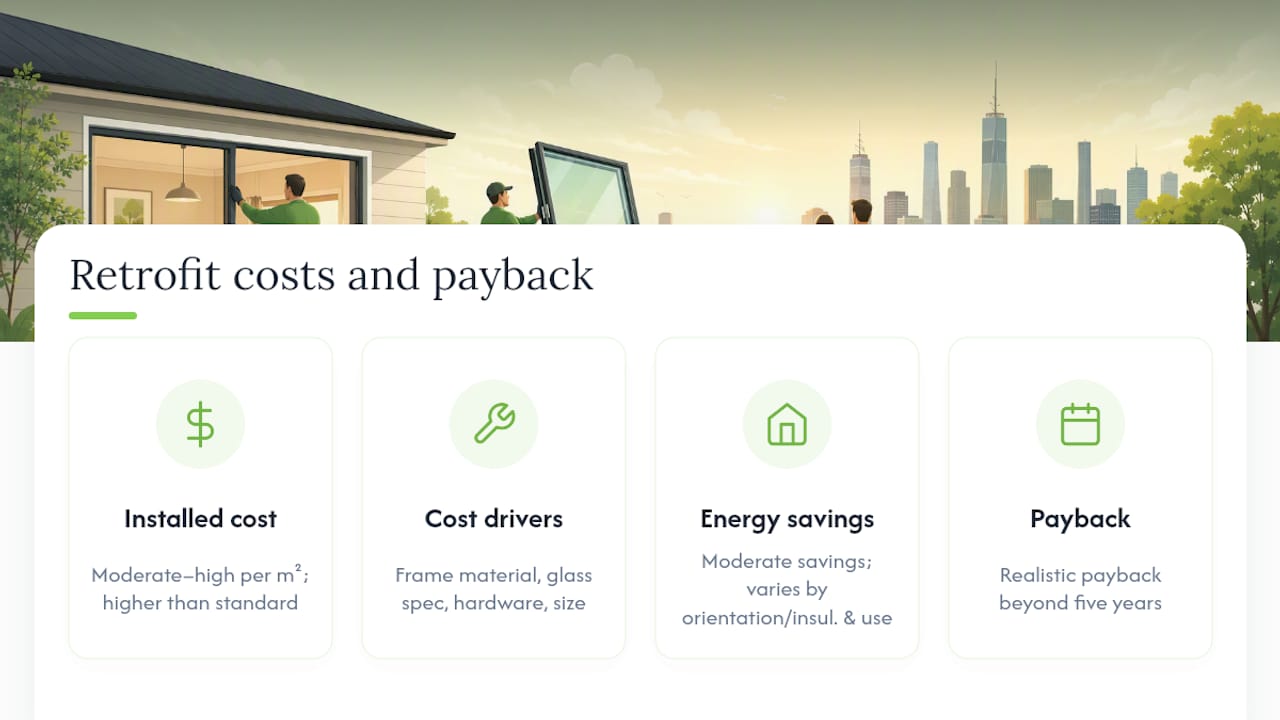
On the savings side, conservative estimates put heating and cooling reductions at a moderate range depending on the home’s orientation, existing insulation, usage and how the household actually uses heating and cooling. A practical payback model uses 12 months of real energy bills, isolates the heating and cooling share, and runs a few scenarios. For most Melbourne homes, a realistic payback sits beyond five years. That is not a reason to avoid it; it is a reason to frame the decision around comfort and noise reduction first, and energy savings as a secondary benefit.
How do you reduce noise for busy Melbourne streets?
Acoustic performance depends on more than glass thickness. Asymmetric glazing, where the two panes differ in thickness, disrupts resonance across a wider frequency range than matched panes. Air gaps of 100mm or more, achievable with secondary glazing, outperform the narrow cavities in standard sealed IGUs for low-frequency traffic noise. Perimeter seals matter as much as the glass itself; a poorly sealed frame leaks sound regardless of what sits in the rebate.
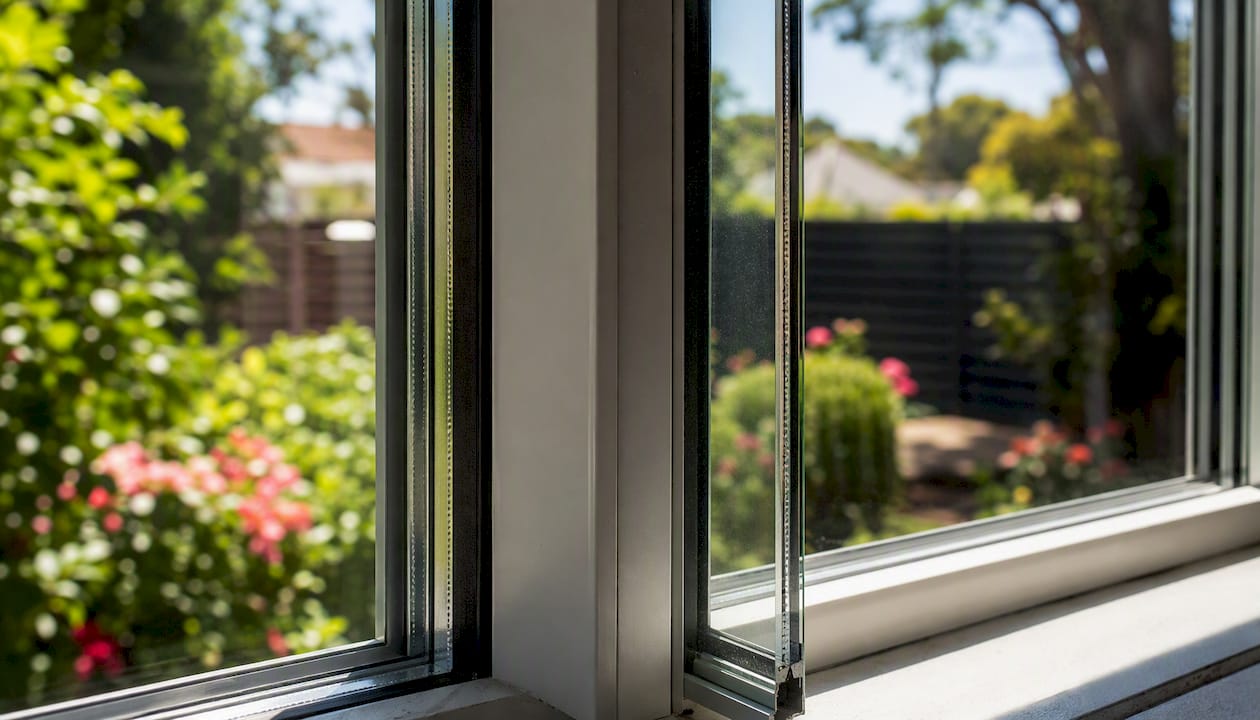
Secondary glazing retrofits can match the thermal performance of standard double glazing and often deliver superior acoustic results because the larger air gap is better suited to the low rumble of trams and arterial traffic. For homes on busy corridors in Fitzroy, Richmond, or Brunswick, secondary glazing is frequently the more practical acoustic choice.
How do you maintain retrofitted double glazing in Melbourne’s climate?
Melbourne’s temperature swings, from 40°C summer days to single-digit winter nights, put real stress on seals and joinery. Inspect perimeter seals annually and replace any that show cracking or compression failure. Timber frames need repainting on the standard cycle to prevent moisture ingress; a dry glazing system with a sloped rebate of about 15° drains condensation away from the timber and is the accepted method for heritage windows. Check drainage channels are clear each autumn before the wet season.
IGU seal failure, visible as fogging between panes, typically indicates the unit has reached end of life rather than a maintenance issue. Quality units carry manufacturer warranties; confirm the term before installation.
Does retrofitting affect your home insurance or property value?
Double glazing generally supports a higher property valuation by improving the home’s energy rating and comfort. Notify your insurer when the work is complete, as the replacement value of the windows changes. Some policies require notification of any structural or significant building work; a retrofit that involves frame modification may qualify. Ask your insurer directly rather than assuming the existing policy covers the upgraded specification.
What permits and heritage rules apply in Melbourne?
Most like-for-like window retrofits do not require a building permit in Victoria, but heritage overlays change that. Properties in a Heritage Overlay under the relevant local planning scheme may need a planning permit before any window alteration, even when the external appearance is preserved. Tailoring IGU features such as argon fill, low-E coatings, and laminated glass to orientation and acoustic needs is standard practice for heritage retrofits, and the quality retrofit approach preserves original timber joinery through thorough frame repair and appropriate glass specification. Check your property’s overlay status through your local council or the Victorian Planning Property Report before signing any contract.
For Victorian home renovation projects specifically, permit requirements vary by council and by the significance of the heritage listing.
Key Takeaways
A double glazing retrofit in Melbourne pays back most reliably when frames are repaired first, the glass specification matches the room’s orientation and noise exposure, and payback expectations are grounded in realistic energy savings of 10–25%.
Point | Details |
Seal and repair frames first | Frame condition and draught sealing determine retrofit quality more than glass specification alone. |
Cost range | Australian installed costs run $300–$1,500 per square metre; frame material and glass spec are the biggest price drivers. |
Realistic payback | Most Melbourne homes see heating and cooling reductions of 10–25%; payback typically extends beyond five years. |
Acoustic priority | Secondary glazing with a large air gap and asymmetric panes outperforms sealed IGUs for traffic noise on busy Melbourne streets. |
Yorcon’s role | Yorcon manages heritage renovations and retrofit projects end-to-end, including frame repair, permit coordination, and installation oversight. |
The part most homeowners underestimate
Most retrofit guides focus on the glass. In our experience at Yorcon, the glass is rarely where projects go wrong. What causes problems is the sequence: homeowners skip draught sealing, ignore a soft corner on a sash rail, or choose a glass spec that suits a brochure rather than their actual orientation. A north-facing bedroom in Melbourne needs a different low-E coating than a south-facing living room. A Victorian terrace on a tram route needs a different acoustic strategy than a 1970s brick veneer on a quiet court.
Heritage windows deserve particular care. The dry glazing method with a sloped drainage rebate is not a premium add-on; it is the only approach that protects original timber joinery over the long term. We have seen retrofits on Edwardian homes that were done without drainage provision, and within a few years the sill was rotting from the inside out.
Pro Tip: Collect 12 months of energy bills before your site assessment. An installer who can see your actual heating and cooling consumption will give you a far more defensible payback estimate than one working from industry averages.
The other thing worth saying plainly: if your frames are significantly deteriorated, a retrofit IGU is not the answer. Full frame replacement or a broader home renovation that addresses the structure properly will serve you better than glazing over a problem.
Ready to get a site assessment from Yorcon?
Yorcon brings nearly 20 years of Melbourne residential construction experience to retrofit projects, including heritage window restoration, frame repair, draught sealing, and full project management from permit to completion. Where other contractors focus on the glass alone, we assess the whole window system: frame strength, sash operation, drainage, and the right IGU specification for your home’s orientation and noise exposure.
A Yorcon site assessment covers a full frame and condition check, a draught test, a bespoke IGU specification, and a realistic timeline and cost estimate. Our heritage renovation team has worked on period homes across Melbourne, and we understand the planning and permit requirements that come with heritage overlays. If your retrofit is part of a larger project, our home renovations service manages every trade under one contract. Contact Yorcon to request your site assessment and get a clear picture of what your windows actually need.
Recommended


