
$12,000–$45,000: Melbourne Heritage Facade Costs, Fixed Fee Scoping

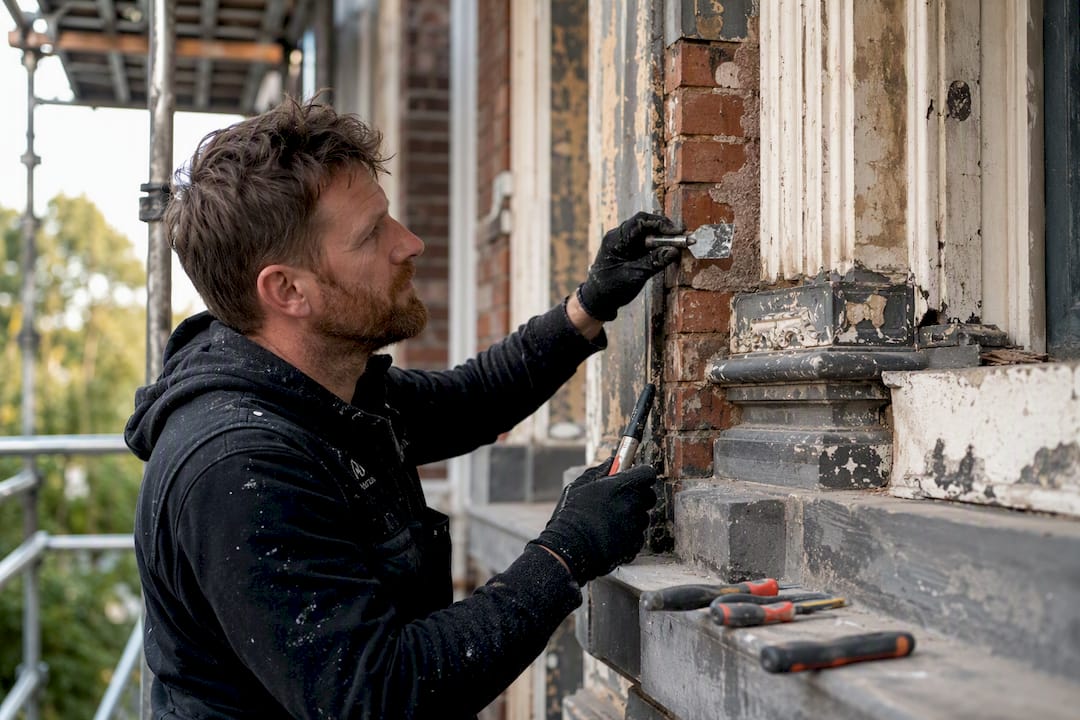
Most Melbourne homeowners are looking at typical costs in the range of several thousands for a straightforward heritage repaint, higher amounts for a light restoration, and significantly more once structural repairs or an extension enter the picture. The real number depends on your facade’s condition, whether a heritage overlay applies, and what’s hiding behind the render. The smartest first move isn’t picking a contractor. It’s commissioning a scoped feasibility study or fixed-fee quote before anyone touches a scaffold.
TL;DR:
A facade repaint in Melbourne typically costs between $12,000 and $25,000 for a single-storey property, rising to $20,000 to $45,000 or more for two-storey terraces.
Structural repairs in full heritage restorations can significantly increase costs due to masonry, timber, and decorative element reinstatement, especially in heritage overlays or protected areas.
Budgeting for lead-safe preparation is crucial for properties built before 1970, as it often accounts for a larger portion of the total cost than paint itself.
Securing permits for heritage-listed properties requires planning scheme checks and possibly formal approvals, adding time and costs that should be factored in early.
Conducting a detailed, fixed-fee feasibility study before requesting quotes helps prevent cost overruns by revealing hidden issues and providing itemized pricing.
Table of Contents
Facade restoration cost Melbourne: indicative ranges by scope
What do sash windows, ironwork and lead-safe prep actually cost?
When does heritage status change your permit and approval costs?
Are there grants or funding options for heritage facade work in Melbourne?
How do you protect your facade investment after restoration?
Facade restoration cost Melbourne: indicative ranges by scope
Melbourne facade jobs fall into four broad tiers, and knowing which one you’re in changes the entire budgeting conversation. A repaint is a different animal to a full restoration with structural intervention, and lumping them together is why so many owners feel blindsided by quotes.
A facade repaint only covers surface preparation, repairs to minor cracking, and a new coating system. It’s the cheapest entry point and the one most owners underestimate in scope, because “just a repaint” on a Victorian terrace still means lead-safe stripping, render patching, and careful colour matching to heritage guidelines.
Light facade restoration adds joinery repairs, minor masonry work, and some decorative element restoration, such as window architraves or simple cast-iron repairs. Full facade restoration with structural repairs is where costs climb fast. This tier involves rectifying cracked or spalling masonry, replacing deteriorated timber members, structural stabilisation of parapets or verandahs, and full reinstatement of decorative fabric. If you’re combining restoration with a rear extension, which is common for Melbourne’s single-fronted terraces and Victorian villas, the two projects share scaffolding and site costs but the overall spend obviously scales with the extension’s own size.
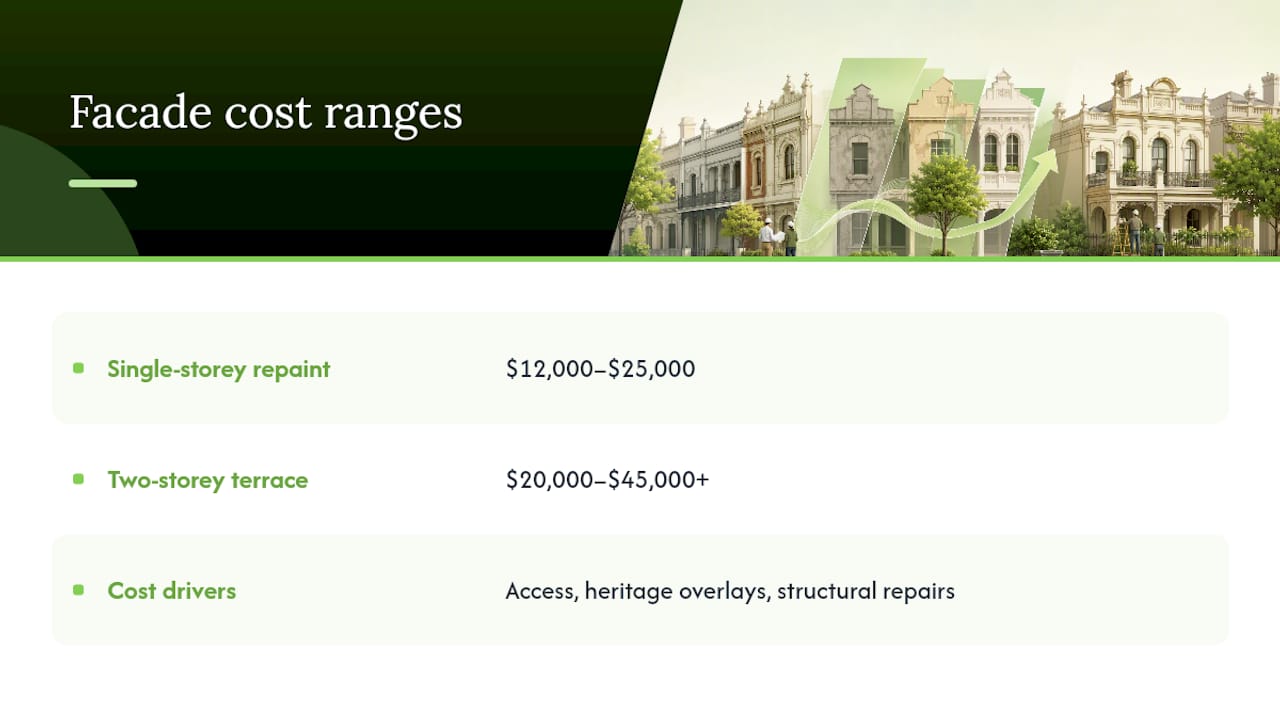
These figures reflect Victoria 2026 market estimates, where a single-storey heritage exterior repaint sits at $12,000 to $25,000 and a two-storey terrace exterior runs $20,000 to $45,000 or more. Access difficulty, party wall constraints, and whether Heritage Victoria or a local heritage overlay applies can all push a job toward the top of its bracket. A double-fronted Victorian in Fitzroy with intact cast-iron lacework and a heritage overlay will always cost more to restore than a similar-sized facade in an area without those controls, simply because the conservation standard is higher and the materials are slower to source.
What do sash windows, ironwork and lead-safe prep actually cost?
Quotes for facade restoration cost Melbourne owners real money in the details, and the line items are where contractors either earn your trust or lose it. Ask for a breakdown by system and surface, not a single lump sum, so you can compare apples with apples across three quotes.
Sash window restoration: often priced per window with a range depending on condition and glazing.
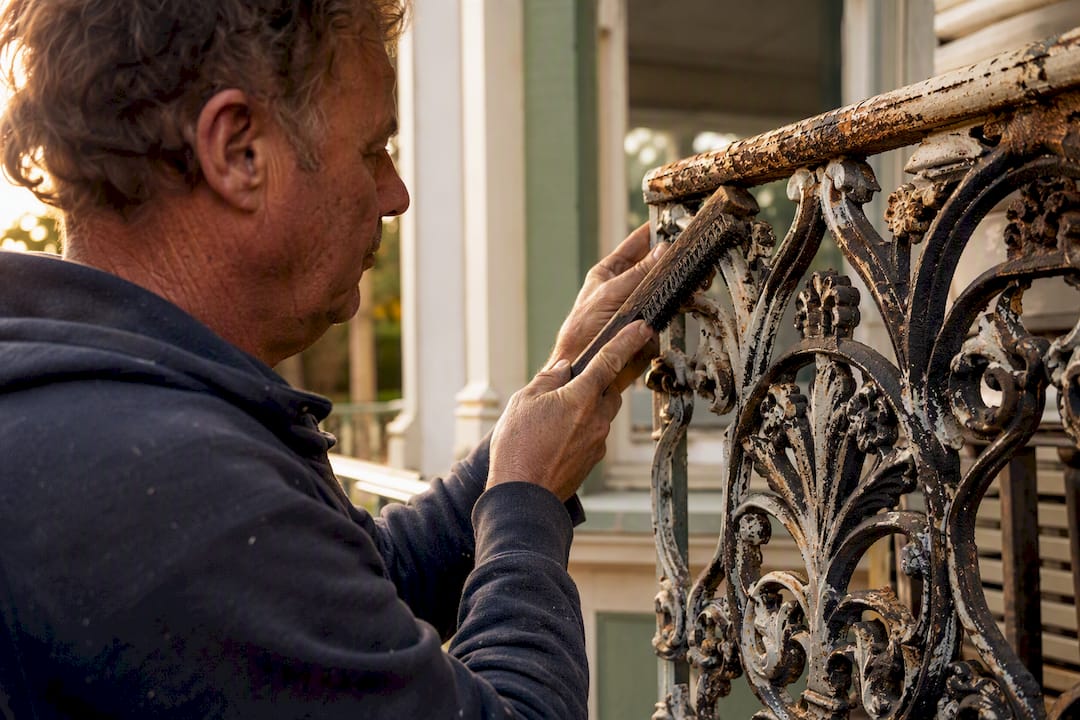
Cast-iron lacework: typically charged per metre with cost varying by rust treatment and repainting needs.
Lead-safe preparation: allowances apply for older painted facades, especially pre-1970, following established lead management standards, following the practices set out in AS/NZS 2311 and AS 4361.2 for paint selection and lead management during refurbishment.
Breathable coatings on lime render: priced by day rate for specialist applicators, since modern acrylic paints trap moisture in lime substrates and accelerate decay.
Decorative finish restoration: cornices, mouldings and render detailing are usually charged as day-rate specialist work rather than a fixed unit price.
Pro Tip: Assume any facade painted before 1970 contains lead. Budgeting for lead-safe preparation from day one avoids the nasty surprise of a “provisional sum” blowing out mid-project once testing confirms what’s actually on the wall.
A significant portion of total facade restoration cost on a heavily decorated Victorian or Edwardian home is attributable to ironwork, joinery, and lead management rather than paint alone. That’s the piece most first-time quotes underestimate.
When does heritage status change your permit and approval costs?
Before you budget a cent, find out whether your property sits inside a Heritage Overlay or is registered with Heritage Victoria. Your council’s planning scheme maps this, and it’s a five-minute check that can save months of rework later. Heritage Victoria’s guidance makes clear that owners of heritage-listed places carry a legal obligation to prevent disrepair, and some maintenance and repair works require formal approval before you start.
Check the planning scheme overlay layer and Victorian Heritage Register before engaging a contractor.
A planning or heritage permit is likely if the work affects the street-facing facade, original fabric, or anything visible from a public road.
Councils can, under local heritage protection provisions, require reconstruction or reinstatement of missing decorative elements rather than allowing simplified repair.
Budget for heritage consultant fees separately from construction costs, alongside council application fees for the permit itself.
Registered contractor and domestic building insurance requirements kick in once your project crosses Victorian Building Authority cost thresholds.
Engaging a heritage-experienced builder who already knows how Stonnington, Yarra or Boroondara councils process these applications genuinely speeds things up and often reduces consultant fees compared with a practice learning the local system from scratch.
How do you stop quotes from blowing out?
It comes down to scope. One priced what’s visible; the other priced what a proper condition survey would have found.
A feasibility study earns its cost back many times over. A thorough feasibility study that includes a fabric census, provisional unit rates for specialist trades, a procurement schedule and an approvals risk matrix generally costs several thousands, and it materially narrows the variance between what you’re quoted and what you actually pay.
Commission a fixed-fee feasibility study before seeking construction quotes, not after.
Ask for a detailed scoping and conservation report that identifies hidden defects, not just surface condition.
Request itemised, systems-by-surface pricing from every contractor: windows, ironwork, render, coatings, scaffold, and permits, each broken out.
Confirm lead-safe methodology, scaffold and footpath permit allowances, and warranty terms in writing before signing.
Pro Tip: A fixed-fee early engagement almost always beats a percentage-based architect fee for heritage work, because a percentage fee has no incentive to control the final construction cost. Fixed-fee scoping aligns everyone’s interest with keeping the number down.
How long does a Melbourne facade restoration project take?
Timelines hinge on approvals as much as construction. Feasibility and council or Heritage Victoria approvals for heritage-listed work typically take four to twelve weeks, depending on how complete your application is and whether the council requests amendments.
Prep and access setup: scaffold erection, site protection, hazardous-materials testing, and professional construction cleaning after the work to ensure a pristine finish.
Specialist repairs: joinery, ironwork, masonry and structural work, the longest phase on most jobs.
Finishing: coatings, decorative reinstatement, and final detailing.
Defects period: a standard warranty window after handover to catch any settling or coating issues.
Lead-safe works and restricted street access commonly add one to three weeks to the programme beyond the base construction estimate, particularly on narrow terrace frontages where scaffold has to share space with a footpath.
Are there grants or funding options for heritage facade work in Melbourne?
Heritage facade restoration doesn’t come with the broad rebate schemes some owners expect, but funding pathways do exist and they’re worth chasing before you finalise your budget. Local councils, including Yarra, Stonnington and Moreland, periodically run heritage grant programs for owners of locally significant properties, usually capped at a modest contribution toward conservation-appropriate materials or specialist trade costs. Availability and eligibility change year to year, so check directly with your council’s heritage advisory service rather than assuming a program from a previous year is still open.
Heritage Victoria itself doesn’t typically fund private residential restoration directly, but its guidance can point you toward state-level programs tied to specific registered places. Some owners also find that a heritage overlay, while it adds approval steps, can support a case for rate concessions or planning flexibility elsewhere on the property, which indirectly eases the overall cost of the project. None of these replace proper budgeting. Treat any grant as a partial offset you confirm after your feasibility study, not a line item you bank on before construction starts.
How do you protect your facade investment after restoration?
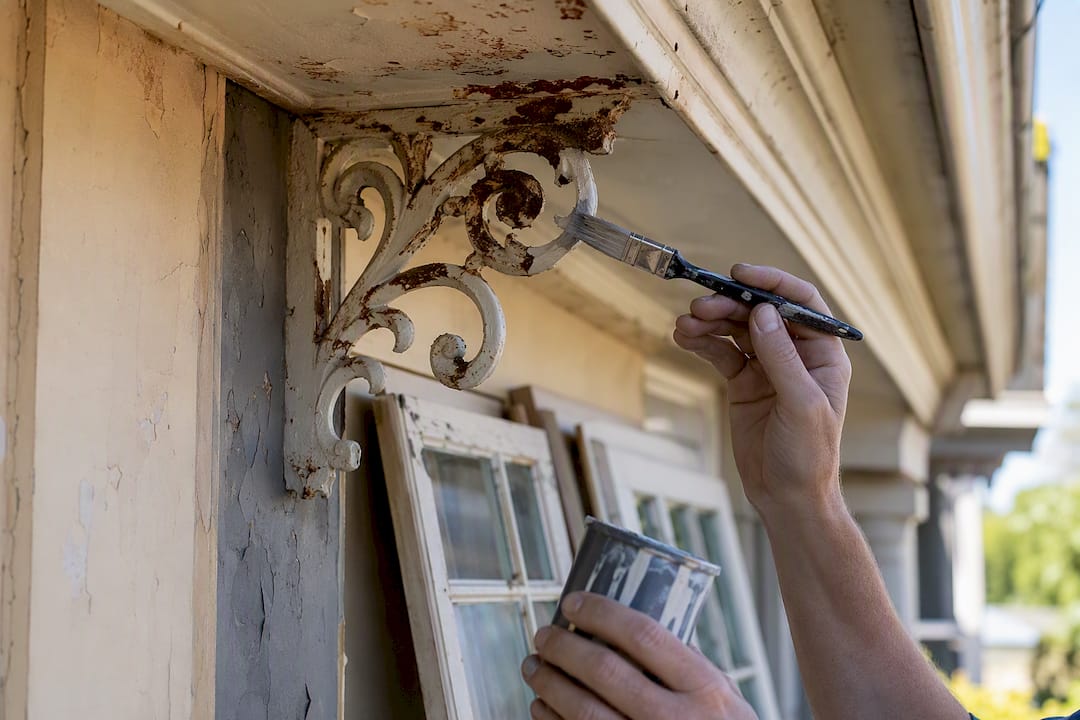
A freshly restored facade is only as good as what happens to it over the following decade. Breathable coatings on lime render need recoating on a longer cycle than modern acrylic systems, generally every seven to ten years rather than five, so ask your contractor what maintenance schedule the coating system they’ve used actually calls for.
Inspect ironwork annually for rust bleeding through paint, particularly after Melbourne’s wetter winters, and touch up small areas before corrosion spreads under the surface. Check sash window putty and joinery seals every couple of years. Timber moves with the seasons, and small gaps let water in long before you’d notice visible rot.
Keep a copy of your detailed scoping and conservation report and the final itemised quote. If you sell the property or need future repairs, that documentation tells the next contractor exactly what methods and materials were used, saving them from re-testing for lead or guessing at coating compatibility. It’s the single easiest way to protect the money you’ve just spent.
Why integrated project management changes the cost equation
Most cost blowouts on Melbourne heritage facades trace back to fragmented delivery: an architect scopes it, a separate builder prices it, and nobody owns the gap between design intent and construction reality. That gap is where variance lives.
Yorcon manages heritage restoration as one continuous process, from feasibility through to defects sign-off, which means the person pricing the ironwork repair is the same person accountable for the final coat going on straight. In practice, early scoping conversations routinely surface hidden structural issues, like deteriorated lintels behind render, before they become a mid-project variation claim. Catching that at the fabric-census stage rather than after demolition has, across comparable heritage projects, kept final costs within a tighter band of the original estimate than owners typically expect.
That’s not a promise every job comes in under budget. Heritage work always carries some genuine uncertainty. But an integrated builder who scopes, quotes and builds under one accountable structure removes the friction that usually causes the biggest overruns.
— Matthew
Ready to get a real number for your facade?
If you’ve read this far, you already know that a reliable facade restoration cost Melbourne figure only comes from someone who’s walked your specific facade, not a generic online calculator. Yorcon runs fixed-fee feasibility studies and detailed scoping and conservation reports for heritage homes across Melbourne, which means you get an itemised, systems-by-surface quote before committing to construction, not a vague estimate that shifts once the scaffold goes up.
Whether your project is a facade repaint, a full restoration with structural repairs, or a restoration paired with a rear extension, Yorcon’s heritage home renovation team manages the whole process, design, permits, heritage approvals and construction, under one accountable roof. If your scope includes extra living space, our home extensions service integrates directly with the facade work so you’re not paying for two separate scaffolds. Before your first meeting, bring your budget ceiling, any existing heritage or condition reports, and a clear note of whether your property sits within a heritage overlay. Book a consultation with Yorcon today and get a scoped, itemised quote before you commit a dollar to construction.
Sources
Recommended


