
Renovation vs Extension: Difference Explained for Homeowners


A renovation is defined as updating or improving existing spaces within your home’s current footprint, while a home extension adds entirely new floor area to the structure. That single distinction drives every major difference in cost, timeline, permits, and property value between the two approaches. Homeowners who confuse the two often budget incorrectly, underestimate approval timelines, or choose a path that doesn’t solve their actual problem. Getting the renovation vs extension difference explained clearly before you commit to a project can save you months of frustration and tens of thousands of dollars.
What is a home renovation? Types, scope, and typical examples
A renovation works within the walls you already have. No new foundations, no new roofline. You are improving, updating, or reconfiguring space that already exists.
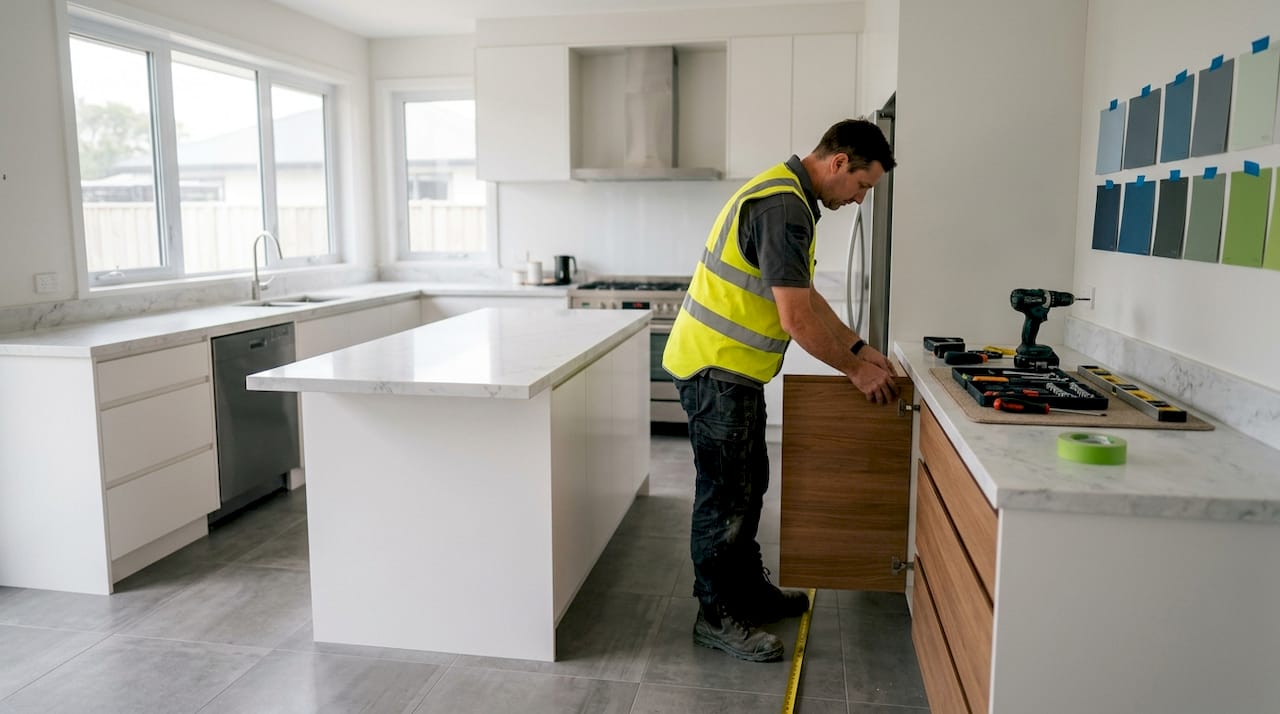
Renovations fall into two broad categories: cosmetic and structural.
Cosmetic renovations include:
Painting walls and ceilings
Replacing flooring (timber, tile, carpet)
Refacing kitchen cabinets
Updating light fixtures and hardware
Refreshing bathrooms with new tiles or vanities
Structural renovations go deeper:
Removing or relocating walls (including load-bearing walls)
Reconfiguring room layouts
Moving plumbing or electrical routes outside existing layouts
Enlarging door or window openings in masonry
The distinction matters because cosmetic renovations generally don’t require approval, but structural renovations do. Reconfiguring walls, adding floor area, or rerouting plumbing triggers the same permit scrutiny as a full extension. Many homeowners are surprised to learn this.
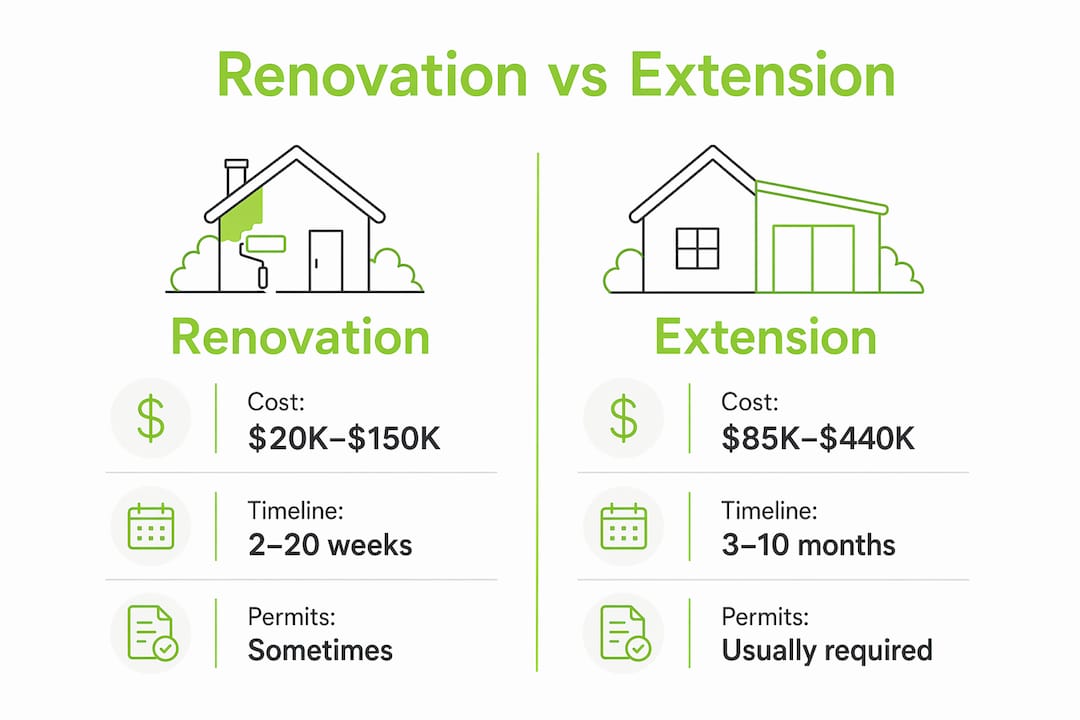
Typical renovation projects include kitchen updates, bathroom remodels, open-plan conversions, and laundry relocations. Renovation costs range from $20,000 to $150,000 or more depending on scope. A cosmetic bathroom refresh sits at the lower end; a full structural kitchen reconfiguration with new plumbing sits at the higher end.
Pro Tip: Before finalizing your renovation scope, ask your builder whether any element triggers a structural or permit requirement. A single load-bearing wall removal can shift your project from a simple renovation into a permit-required structural job.
What is a home extension? Types, applications, and impact
A home extension is defined as adding new floor area to your existing home. The structure physically grows. New foundations are poured, new walls go up, and the roofline expands or a second story is added. This is what the industry formally calls an “addition” in some markets, though “extension” is the standard term used across Australian residential construction.
Common extension types include:
Ground-floor extensions: Expanding outward into the backyard or side setback
Second-storey additions: Building upward when the block doesn’t allow outward expansion
Granny flats: Self-contained dwellings added to the property, often at the rear
Wraparound extensions: Extending along two sides of the home to maximize living area
Homeowners choose extensions when they need more bedrooms, a larger living area, a dedicated home office, or an additional bathroom that simply cannot fit within the existing layout. Renovating cannot solve a space problem. Only extending can.
Extensions almost always require development applications, engineering reports, and neighbor notifications. Extensions require development applications and engineering reports with neighbor considerations in nearly every case. That approval process adds time and cost before a single brick is laid.
Extension costs range from $85,000 to $360,000 for a ground-floor addition and $160,000 to $440,000 or more for a second-storey addition. These figures reflect the complexity of tying new construction into an existing structure, including roofing, foundations, and structural engineering.
Pro Tip: Check your block size, side and rear setbacks, and local council zoning rules before planning any extension. Many Melbourne homeowners discover mid-planning that their block cannot accommodate the extension they envisioned.
How do costs, timelines, and permits compare?
This is where the renovation vs extension difference becomes most concrete for budgeting and planning. The gap between the two approaches is significant across every practical measure.
Cost comparison
Category | Renovation | Extension |
Typical cost range | $20,000–$150,000+ | $85,000–$440,000+ |
Cost per square meter | Lower; no new structure | $2,800–$5,500 per m² |
Structural complexity | Low to moderate | High; foundations, roofing, engineering |
Hidden cost risk | Moderate | Higher; existing structure tie-in |
Extensions often cost more per square meter than new construction because of the complexity of integrating new work into an existing structure. Hidden site conditions, like old footings or buried services, can push costs higher without warning.
Timeline comparison
Renovations typically take 2–20 weeks depending on complexity. Extensions require 3–10 months due to structural engineering, council approvals, and construction sequencing. That timeline difference has real lifestyle implications. A renovation might mean two weeks out of your kitchen. An extension could mean six months of living on a construction site.
Permit and approval differences
Most internal renovations require minimal council approvals
Structural renovations (load-bearing wall removal, new openings in masonry) require building permits
Heritage overlays can restrict even cosmetic changes to street-facing facades, causing council delays
Extensions almost always require a full development application, engineering certification, and neighbor notification
Heritage properties in Melbourne suburbs like Fitzroy, Collingwood, and Hawthorn face an additional layer of scrutiny. Even repainting a front facade in a heritage overlay zone can require council sign-off. If your home sits within a heritage overlay, factor that into your planning timeline from day one.
Return on investment: renovation vs extension
The financial return from each approach differs more than most homeowners expect.
Cosmetic renovations deliver the highest ROI, ranging from 3–10 times their cost. A $15,000 paint, flooring, and fixture refresh can add $50,000 or more in perceived value at sale. Kitchen and bathroom renovations return 0.6–1.2 times their cost. Extensions generally return 0.7–1.0 times their cost unless they push the home into a higher buyer price bracket.
That doesn’t mean extensions are poor investments. The value calculation for an extension is different.
Extensions add livable floor area, which directly increases the home’s market size category
A three-bedroom home extended to four bedrooms enters a different buyer pool entirely
In high-land-value Melbourne suburbs, adding floor area can generate strong capital growth
Cosmetic renovations improve presentation but don’t change the home’s fundamental size or function
The smartest projects combine both approaches. A well-executed extension paired with a cosmetic renovation of the existing interior delivers the maximum value uplift: more space, better presentation, and a home that competes at a higher price point in the market.
When you combine renovation and extension under one contract, you also reduce site disruption, consolidate approvals, and often lower the total cost compared to running two separate projects. At Yorcon, we see this combination deliver the strongest outcomes for Melbourne homeowners who want both better space and more space.
How to decide between renovating, extending, or combining both?
The right choice depends on what problem you are actually trying to solve. Work through these questions in order.
Do you need better space or more space? If your rooms feel dated, cramped in layout, or poorly configured, a renovation may solve the problem. If you genuinely need an extra bedroom, a larger living area, or a home office that doesn’t exist, only an extension adds that space.
What is your budget? Renovations are accessible from $20,000. Extensions start at $85,000 for a modest ground-floor addition and climb quickly. Be honest about what you can finance before committing to a scope.
What does your block allow? Block size, side setbacks, rear setbacks, and council zoning rules determine whether an extension is even possible. A narrow inner-city block may rule out a ground-floor extension entirely, leaving a second-storey addition or renovation as the only options.
What are your long-term plans? If you plan to sell within three years, prioritize cosmetic renovations for maximum ROI. If this is your forever home, an extension that adds a bedroom or larger living area pays dividends in daily quality of life regardless of resale value.
Can you combine both? The best projects combine renovations and extensions under one contract to reduce costs, approvals, and site disruption. If your budget allows, this approach delivers a comprehensive upgrade in a single build phase.
Have you consulted a professional early? Design decisions made before permits are lodged are free. Design changes made after permits are approved are expensive. Engaging an architect or experienced builder like Yorcon at the planning stage prevents costly surprises.
Pro Tip: Ask your builder to review your council’s planning scheme before you finalize any scope. Zoning rules, overlays, and setback requirements can eliminate options you assumed were available.
For homeowners weighing whether to extend, renovate, or start fresh, Yorcon’s rebuild vs renovate guide covers the full decision framework including when a knockdown rebuild makes more financial sense than either approach.
Key takeaways
A renovation updates existing spaces without adding floor area, while an extension adds new floor area. Choosing the wrong approach for your actual need is the most common and most costly mistake homeowners make.
Point | Details |
Core difference | Renovations improve existing space; extensions add new floor area to the home. |
Cost gap | Renovations start at $20,000; extensions start at $85,000 and climb to $440,000 or more. |
Timeline difference | Renovations take 2–20 weeks; extensions take 3–10 months including approvals. |
Permit complexity | Structural renovations and all extensions require building permits and council approvals. |
Best ROI strategy | Combining renovation and extension under one contract maximizes value and minimizes disruption. |
What I’ve learned from watching homeowners choose the wrong path
After nearly two decades working on Melbourne homes, the pattern I see most often is this: homeowners choose a renovation when they actually need an extension, or they attempt an extension when a well-planned renovation would have solved the problem for half the cost.
The confusion usually comes from underestimating what a renovation can achieve. A skilled structural renovation, like opening up a closed kitchen to the living area or reconfiguring a poorly laid-out bathroom, can transform how a home feels without adding a single square meter. Homeowners who assume they need more space often discover that better space was the real answer.
The reverse is also true. I’ve seen homeowners spend $80,000 on a kitchen renovation in a three-bedroom home that desperately needed a fourth bedroom. The kitchen looks beautiful. The family is still cramped. The renovation solved the wrong problem.
My honest advice: before you decide anything, write down the specific problem you are trying to solve. Not “the house feels small.” Something concrete, like “we need a fourth bedroom” or “the kitchen and living area feel disconnected.” That clarity will tell you whether you need a renovation, an extension, or both.
One more thing worth saying plainly: permits and heritage overlays catch more homeowners off guard than any other issue. If your home was built before 1940, check the heritage overlay status before you plan anything. The restrictions can be significant, and discovering them mid-design is expensive.
— Matthew
Yorcon’s approach to renovations and extensions in Melbourne
Deciding between a renovation and an extension is one thing. Executing it well is another.
Yorcon has spent nearly 20 years managing both renovation and extension projects across Melbourne, from cosmetic updates in period homes to full second-storey additions in inner-city suburbs. We handle the entire process, including design, permits, council approvals, and construction, so you don’t have to coordinate between separate consultants. Whether you need a focused home renovation or a full home extension, our team works with you from the first conversation to the final inspection. If you’re ready to talk through your project, reach out to Yorcon for a consultation.
FAQ
What is the main difference between a renovation and an extension?
A renovation updates or improves existing spaces within your home’s current footprint. An extension adds entirely new floor area by building outward or upward.
Do home extensions always require council approval?
Extensions almost always require a development application, engineering reports, and neighbor notification. Most internal cosmetic renovations do not require council approval, but structural renovations do.
How long does a home extension take compared to a renovation?
Renovations take 2–20 weeks depending on scope. Extensions require 3–10 months due to structural engineering, council approvals, and construction complexity.
Which has a better return on investment: renovating or extending?
Cosmetic renovations deliver the highest ROI at 3–10 times their cost. Extensions return 0.7–1.0 times their cost but add floor area that can push the home into a higher buyer price bracket.
Can I renovate and extend at the same time?
Yes, and combining both under one contract is often the most cost-effective approach. It consolidates approvals, reduces site disruption, and delivers a complete upgrade in a single build phase. You can also explore renovation fixture options when planning your interior finishes alongside the structural work.
Recommended


